

Illustrative image: knitted baby booties and soft blankets in a wicker basket by a nursery window.
PREGNANCY
Healthy pregnancy prenatal care is important. Here is everything you need to know.
Healthy Pregnancy Prenatal Care
June 3, 2024
Quick Answer
Prenatal care is the regular medical care you get during pregnancy to protect you and your baby. Yes, it makes a real difference. Women who get regular prenatal care are less likely to have pregnancy complications, and problems that show up early are easier to treat. Book your first visit as soon as you have a positive pregnancy test.
Key Takeaways
- Call your provider as soon as you have a positive pregnancy test, or before you conceive if you can.
- Visits usually happen about every 4 weeks, then every 2 weeks, then weekly near your due date, though your provider may tailor this to you.
- Take 400 mcg of folic acid daily, starting at least one month before conception.
- Choose an OB/GYN, midwife, or family doctor based on your health history and risk level.
- Know the urgent warning signs and call right away if you notice any of them.
Healthy pregnancy prenatal care is an effective preventative health measure that can help keep you and your baby safe. Getting regular prenatal care is one of the best things you can do for yourself and your baby during pregnancy. Pregnant women who get prenatal care are less likely to experience pregnancy complications than women who do not.
What is Healthy Pregnancy Prenatal Care?
Prenatal care is specialized medical care provided to a pregnant woman during pregnancy. At each visit, the provider will do a variety of things including weight checks and measurements to ensure the baby is growing on schedule; regular urine tests to check for any abnormalities; blood tests and imaging tests, such as ultrasounds, to make sure mom and baby are healthy. Prenatal visits also offer the opportunity to learn what to expect throughout every pregnancy stage and ask any questions that might arise. Your healthcare provider will probably talk about nutrition, exercise, and how to manage any preexisting health conditions you might have during pregnancy.

Illustrative image: two hands resting on the belly of a person in a cream knit sweater, seen from the side.
When Should You Start Healthy Pregnancy Prenatal Care?
Ideally, you should make an appointment as soon as you suspect you are pregnant or have a positive pregnancy test. On average, most people realize they’re pregnant between five and six weeks’ gestation, although some might not know until much later. The earlier you start prenatal care, the better. The timing of your first visit depends on your medical history, which means some women may benefit from seeing their provider before they even become pregnant. Pre-pregnancy planning can help improve your chances of starting your pregnancy healthy and strong.
Who Provides Healthy Pregnancy Prenatal Care?
Several healthcare professionals can provide your care. Who you choose to see might depend on your medical history, current health status, level of pregnancy risk, preference for care, and overall, how you feel about pregnancy. Some medical professionals that provide prenatal care include:
Obstetrician
Obstetricians (OBs) are medical doctors who specialize in women’s reproductive health and pregnancy. Women who are high-risk or have preexisting health conditions might feel most comfortable receiving care from an obstetrician as they have the most experience in managing medical complications and complex medical situations.
Certified Nurse Midwife (CNM)
CNMs are nationally accredited registered nurses who specialize in pregnancy and birth. CNMs tend to have a more natural approach to childbirth than OBs. CNMs are an excellent choice for women with healthy, low-risk pregnancies who do not want unnecessary medical intervention.
Certified Professional Midwife (CPM)
CPMs are independent professional midwives who complete training through the Midwifery Education Accreditation Council (MEAC). They can receive anything from a certification to a doctoral degree through the MEAC. If you decide to work with a CPM, make sure they are licensed to work in your state.
Family Practice Doctor
All family practice doctors (FPs), also known as primary care providers (PCPs), are medical doctors trained in pregnancy and perinatal care, although not all choose to offer these services. In rural areas, FPs often are a one-stop-shop for all pregnancy, birth, and postpartum care. One study showed that FPs delivered 67% of babies born vaginally in rural hospitals and 46% of babies born by c-section.
How to Choose Your Provider
Choosing a care provider during your pregnancy is a highly personal decision informed by your health, your feelings about pregnancy, and how much decision-making involvement you want to have surrounding your pregnancy and birth. A few practical questions that you might consider as you decide on your provider include:
- Will your insurance pay for your chosen provider?
- What are the provider’s credentials and qualifications?
- Are they experienced with handling pregnancy complications?
- How easy is it to schedule an appointment with the provider?
- Would you have access to the provider after-hours for urgent concerns?
- What hospitals does the provider partner with?
- What are the facilities like at these hospitals?
- Is the hospital conveniently located for you?
- Who is their support staff that would be involved in your care?
- Would you feel comfortable discussing personal matters with the provider?
- Is the provider’s office conveniently located for you?
- Do they have additional resources like a lactation consultant or childbirth classes?
If your pregnancy is high-risk or you have preexisting health issues, an OB might be an excellent choice for you. If you are low or average risk and want a more holistic approach to pregnancy and childbirth, you might prefer to collaborate with a midwife.

Photo by MART PRODUCTION on Pexels.
Before You Get Pregnant
If you plan to get pregnant, you might want to schedule a pre-pregnancy appointment. During this appointment, you’ll review your health history with your provider to address any potential risks to a healthy pregnancy. Your provider will talk to you about diet, lifestyle, medications, and vaccine history. This early stage is the perfect time to discuss and plan for potential issues that could become complications. During your pre-pregnancy appointment, you will probably be encouraged to start taking prenatal vitamins and to change any unhealthy habits that can be detrimental to pregnancy, such as smoking, drinking alcohol, or taking recreational drugs.
Prenatal Vitamins and Folic Acid
Folic acid is a B vitamin that helps your baby’s brain and spine form. The CDC recommends that every woman who could become pregnant take 400 micrograms (mcg) of folic acid every day, starting at least one month before conception and continuing through pregnancy. It lowers the chance of serious birth defects of the brain and spine called neural tube defects.
Most prenatal vitamins already include folic acid, so check the label and ask your provider which one suits you. If you have had a pregnancy affected by a neural tube defect, your provider may recommend a higher dose, so never change your dose on your own. To go deeper on the vitamin itself, read why folate matters for women. For more everyday habits that support your pregnancy, see our ten ways to ensure a healthy pregnancy.
What to Expect Once You Are Pregnant
Start your prenatal care as soon as you realize you might be pregnant. The frequency of your appointments will change every trimester, and different things will be monitored as your pregnancy advances.
First Trimester
Most pregnant women have an appointment once every four weeks during the first trimester. During these visits, you will be weighed and have your height measured. You will likely have a blood test to determine your blood type, hemoglobin levels, and Rh status. Rh, also known as Rhesus factor, is an inherited protein found on the surface of some red blood cells. Not everyone carries this protein. People who carry this protein are Rh-positive, and those who do not are Rh-negative. Having a positive or negative Rh factor does not affect your health; however, if the mother and father have different Rh statuses, the pregnant woman will need special care throughout pregnancy and delivery to avoid any complications from Rh incompatibility.
During this visit, you will have a physical exam, including breast and pelvic exams. Your provider can estimate a due date based on your baby’s development and the date of your last period. You will also learn about healthy nutrition, safe exercise during pregnancy, as well as how to optimize your baby’s wellbeing in these critical early weeks.
Second Trimester
Appointments will continue every four weeks during the second trimester. Your provider will regularly monitor your baby’s growth and activity levels, and you will hear your baby’s heartbeat at each appointment. You might be offered prenatal screenings and tests during this pregnancy stage, depending on your specific situation. Most people will have an ultrasound during this trimester to see how the baby is developing and to determine the baby’s sex if interested.
You’ll have blood tests between weeks 24-28 to check iron levels, Rh status (if that was not already done), and to make sure blood sugar levels are normal. Genetic tests can now be performed to check for Down Syndrome and spina bifida if these are concerns due to age or family history.
Third Trimester
The frequency of your appointments speeds up during the third trimester. You might see your provider every two weeks until your 36th week of pregnancy, where it becomes a weekly check-in. Weight gain, blood pressure, fetal movements, and heartbeat will be monitored at every appointment. You might notice heartier kicks and more vigorous movements in the third trimester, especially at night. However, although you should still be feeling regular movements, the movements might get less intense as your baby grows in preparation for birth because it has less room to play.
You will probably be tested for group B streptococcus (GBS) toward the end of your pregnancy. GBS is a common bacterium that can cause serious illness in babies born vaginally. If you test positive for GBS, you will be treated with antibiotics during labor to prevent any health issues for your baby. Your provider will monitor your baby’s position in the womb. If your baby is not head down by 36 weeks, the likelihood that it will turn before birth is low. If this occurs, you can discuss your options for safe delivery with your provider. A c-section might be suggested.
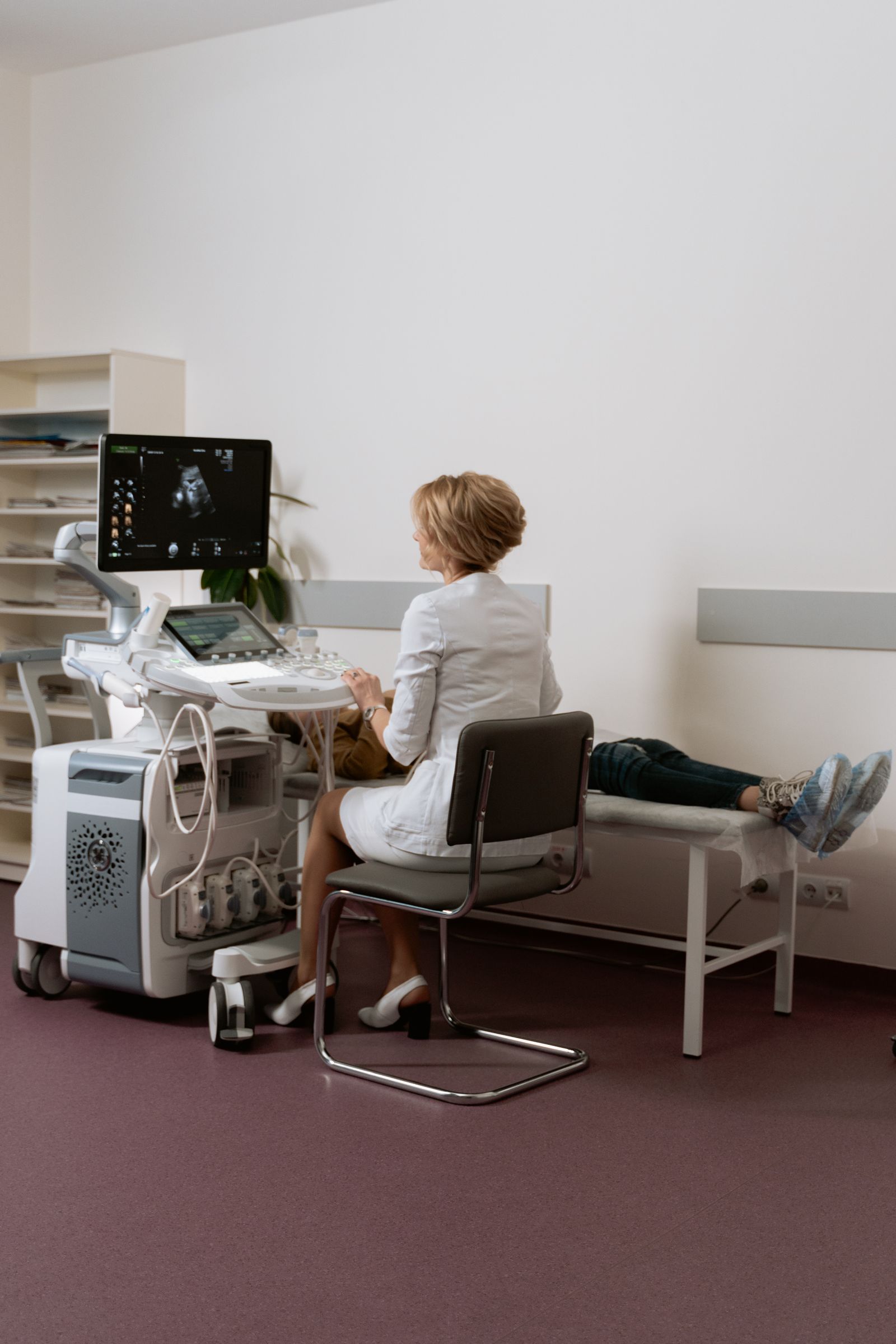
Photo by MART PRODUCTION on Pexels.
Prenatal Visit Schedule at a Glance
Here is the traditional prenatal visit schedule for a low-risk pregnancy, along with the tests and shots that usually come up at each stage. Visits get closer together as your due date nears.
| Stage | Usual visit pattern | Common tests and shots |
|---|---|---|
| First visit | As soon as you have a positive pregnancy test | Health history, blood type and Rh status, hemoglobin, urine test, physical exam |
| Up to week 28 | About every 4 weeks | Baby’s heartbeat, mid-pregnancy ultrasound, optional screening tests, and a blood sugar test for gestational diabetes, usually between weeks 24 and 28 |
| Weeks 28 to 36 | About every 2 weeks | Blood pressure and weight checks, fetal movement review, and a Tdap (whooping cough) shot between weeks 27 and 36 |
| Week 36 until birth | Every week | Group B strep test, baby’s position check, delivery planning |
Higher-risk pregnancies, including some at older ages, often need extra visits. See our guide on what age is considered high risk for pregnancy to learn more. Some practices also offer fewer in-person visits when a pregnancy is low risk, so ask your provider which schedule fits you. The CDC recommends one Tdap dose in every pregnancy, ideally early in that 27 to 36 week window.
What About High-Risk Pregnancy?
High-risk pregnancies are pregnancies with a higher-than-normal risk of complications. Numerous circumstances that can contribute to a pregnancy being high risk include:
- Age, either below 20 or above 35
- Obesity
- Drug, tobacco, and alcohol use
- Diabetes
- High blood pressure
- Kidney disease
- Heart disorders
- Autoimmune disease
- Polycystic ovary syndrome (PCOS)
- Abnormal placenta placement
- Having multiple babies (e.g., twins, triplets)
- Having a history of preterm delivery
- Poor fetal growth
How Do I Handle Pregnancy with Multiples?
Although this is not true for everybody, you might need to see a maternal-fetal specialist if you are pregnant with multiples. If you do not see a maternal-fetal specialist, make sure your doctor has experience with multiples and is comfortable managing your pregnancy.
You will need frequent monitoring to keep an eye on potential complications, and you will need more folic acid and iron supplementation than someone with a singleton pregnancy. While all multiple pregnancies are not automatically fated to be c-section deliveries, they are at increased risk of needing surgical intervention. Discuss different potential scenarios with your doctor to find the safest delivery options for you.

Photo by MART PRODUCTION on Pexels.
Staying Healthy During Pregnancy
We know prenatal care, a healthy diet, and adequate physical activity are essential to staying healthy during pregnancy. Still, they are not the only important things contributing to overall health and well-being. Perinatal depression can occur during and after childbirth and can be treated. Having social support during pregnancy is vital to having a positive pregnancy experience. This can be support from friends, family, your healthcare provider, or professional mental health support. Race-based disparities in our healthcare system can make finding adequate healthcare, transportation, and childcare more challenging and can increase the stress and uncertainty experienced during this vulnerable phase of life. Talk to your provider for resources that can offer the support you need.
Warning Signs: When to Call Your Provider Right Away
Most pregnancies go smoothly, but some symptoms can point to a serious problem for you or your baby. The CDC lists these urgent warning signs, and you should seek medical care right away if you notice any of them during pregnancy.
- A headache that will not go away or keeps getting worse
- Dizziness or fainting
- Changes in your vision
- A fever of 100.4°F or higher
- Extreme swelling of your hands or face
- Trouble breathing
- Chest pain or a fast-beating heart
- Severe nausea and vomiting
- Severe belly pain that does not go away
- Your baby moving less or stopping moving
- Vaginal bleeding or fluid leaking
- Severe swelling, redness, or pain in one leg
- Overwhelming tiredness
- Thoughts about harming yourself or your baby
Urinary tract infections are also common in pregnancy, so tell your provider about any burning or pain when you pee. Our guide to urinary tract infections in pregnancy explains why. Warning signs do not stop at delivery either, and our post on postpartum anxiety, bleeding and recovery covers what to watch for afterward.
If something just does not feel right, or you are not sure it is serious, call your provider. You know your body best, sis.
Getting Ready for Baby
As your due date approaches, you might want to baby-proof your house, prepare your baby’s room, and take birthing classes. By this point, you have probably already decided where to deliver, whether at home, in a birth center, or a hospital. Now is a good time to tour your birth center or hospital. If you are delivering at home, be sure to have everything you’ll need handy.
Pack a bag for the birth center or hospital, and make sure friends or family members know of their responsibilities once you have gone into labor (e.g., babysitting an older sibling or feeding your dog). Most hospitals will not let you leave without a properly installed car seat, so have that ready to go. Curious what labor really feels like? Read our OB/GYN’s guide to the things no one tells you before giving birth. Congratulations, your baby is almost here, and you have done everything you can to give them the best possible start in life.
Frequently Asked Questions
Does regular prenatal care really affect the health of a pregnancy?
Yes. Regular prenatal care helps keep you and your baby safe. Women who get prenatal care are less likely to have pregnancy complications than women who do not, and checkups catch problems such as high blood pressure or gestational diabetes early, when they are easier to manage.
When should I schedule my first prenatal visit?
Call as soon as you have a positive pregnancy test. If you are planning a pregnancy, a pre-pregnancy visit is even better, because it lets your provider review your health history, medications, vaccines, and vitamins before you conceive.
How often will I see my provider during pregnancy?
For a low-risk pregnancy, the traditional pattern is about one visit every 4 weeks until week 28, every 2 weeks from week 28 to week 36, and then weekly until birth. Higher-risk pregnancies often need more visits, and some practices offer fewer for low-risk pregnancies, so your provider will set the schedule that fits you.
What happens at the 36-week prenatal appointment?
Around week 36 your visits typically become weekly. Your provider will usually do a group B strep test, check your blood pressure and weight, listen to your baby’s heartbeat, confirm that your baby is head down, and go over your plan for labor and delivery.
Which vitamin matters most before and during early pregnancy?
Folic acid. The CDC recommends 400 micrograms (mcg) daily for every woman who could become pregnant, starting at least one month before conception, because it helps prevent serious birth defects of the brain and spine. Most prenatal vitamins contain it, and you can learn more in our guide to why folate matters for women.
Take the Free Lifestyle Assessment
Answer a few quick questions, then reserve your free consultation with Doctor P.
Explore My Programs
From quick resets to hands-on support, here's everything I offer to help you feel like yourself again.
Program
The Madame Estrogen Mastermind
Access a comprehensive solution to say goodbye to your hormonal imbalance!
The Hormone Wellness Network
Embody hormone harmony. Unleash your inner wonder woman — masterclasses, accountability, sisterhood, access to me, and more!