

WOMEN'S HEALTH
Does folic acid balance hormones? Learn what folate does for women who aren’t pregnant, how much you need, top food sources, and when to see a doctor.
Why Folate Matters for Women (Yes, Even If You’re Not Pregnant)
February 5, 2026
Quick Answer
Yes, women who are not pregnant still need folate. Folate is vitamin B9, and your body uses it every day to make DNA and new cells, build red blood cells, and process amino acids. Adult women need 400 mcg DFE (dietary folate equivalents) daily. Folic acid is the man-made form in supplements and fortified foods, and the CDC advises 400 mcg a day for anyone who could become pregnant.
Key Takeaways
- Every woman needs about 400 mcg DFE of folate a day, pregnant or not.
- Low folate can cause fatigue, irritability, trouble concentrating, and a type of anemia.
- Folic acid is the only form shown to prevent neural tube defects, so the CDC advises 400 mcg daily for anyone who could become pregnant.
- Research does not show that folic acid balances hormones on its own, so it is not a hormone fix.
- Leafy greens, beans, lentils, and asparagus can build a strong folate base for most women.
Most of us were taught that folate only matters if you’re pregnant or trying to be. So if that’s not your current season of life, it’s easy to assume this nutrient isn’t really your concern. But here’s the thing, sis. Your body doesn’t pause its needs just because you’re not growing a baby.
Folate plays a part in how you feel every single day, from your energy to how clearly you think. So if you’ve ever felt run-down, foggy, or like your body just isn’t bouncing back the way it used to, folate may be part of the conversation worth having.
This isn’t about adding another overwhelming health rule to your life. It’s about understanding why your body still needs folate, what it can and cannot do for your hormones, and how focusing on folate high foods and folate in food can make a real difference without turning your life upside down.
Why Folate Matters for Women
Folate is something your body uses all the time, whether you’re aware of it or not. It’s one of those behind-the-scenes nutrients that doesn’t get much attention until something feels off. So you may wonder why folate matters for women who are not pregnant.
Your body relies on folate to make and repair DNA, build new cells, form healthy red blood cells, and process the amino acids your brain and nervous system depend on. Because women deal with monthly cycles, stress, and constant hormonal shifts, a steady supply of folate supports the everyday work your body is doing in the background.
If you’re feeling tired more often than you think you should, mentally foggy, or just not quite yourself, folate could be one of the pieces worth paying attention to. It is rarely the only piece, which is why I always look at the full picture with my patients.
Folate’s Role in Hormones, Mood, and Energy
Ever have days where you feel exhausted, moody, or emotionally flat for no clear reason? You’re not alone, and it’s not all in your head.
Folate helps your body make the red blood cells that carry oxygen, which is why low levels can leave you tired and short on energy. It also takes part in the chemistry your brain uses to regulate mood and focus, so a true shortfall can show up as irritability or brain fog.
Here is the part that gets lost online. Those symptoms can point to low folate, but they have many other causes, including stress, poor sleep, low iron, low vitamin B12, and thyroid problems. A symptom alone does not tell you that folate is the issue, and our look at the warning signs of a hormonal imbalance can help you sort out what else to consider.
Does Folic Acid Balance Hormones?
This is the question I hear most, and the honest answer is that we do not have good proof yet.
Folate works in the background of your body’s chemistry, so it is reasonable to pay attention to it. But research has not shown that taking folic acid changes estrogen or progesterone levels in women, which means it should not be treated as a hormone fix.
What the research does show is an association. In one study of 259 healthy women with regular cycles, those who got more folic acid from supplements and fortified foods tended to have higher progesterone after ovulation and were less likely to skip ovulation. That is a link, not proof that folic acid caused it, and the authors called for more research.
So if you are dealing with irregular periods, PMS, or other signs of a hormone imbalance, folate is one piece of the puzzle, not the whole answer. Getting your levels and your cycle properly checked is the next step.
Folate vs. Folic Acid: What’s the Difference?
Folate is the general name for vitamin B9, and it is the form that shows up naturally in food. Folic acid is the man-made version added to supplements and to fortified foods like breakfast cereals and enriched breads.
The two behave differently in your body. About 85% of folic acid taken with food is absorbed, compared with roughly 50% of the folate found naturally in food, according to the NIH Office of Dietary Supplements. Folic acid is also the only form shown to help prevent neural tube defects (serious birth defects of the baby’s brain and spine), which is why the CDC recommends it for anyone who could become pregnant.
You may have heard that some women cannot process folic acid. That usually refers to a common variation in the MTHFR gene. MedlinePlus notes that these variations are very common and do not necessarily raise your risk for any health condition. If you know you have one, ask your doctor whether methylfolate is a better fit for you.
So I like to start with folate in food and add a supplement when your body or your plans call for one. Food gives you folate along with fiber and other nutrients, and a supplement fills the gap.
How Much Folate Do You Need Each Day?
Your target depends on where you are in life. Here are the daily amounts from the NIH Office of Dietary Supplements and the CDC.
| Who | Daily amount | Good to know |
|---|---|---|
| Women 19 and older | 400 mcg DFE | Food folate, fortified foods, and supplements all count. |
| Anyone who could become pregnant | 400 mcg folic acid | From a supplement or fortified foods, in addition to the folate in your meals. |
| Pregnancy | 600 mcg DFE | Ask your OB/GYN which prenatal fits you. |
| Breastfeeding | 500 mcg DFE | Needs stay above the non-pregnant amount. |
| Upper limit for adults | 1,000 mcg folic acid | Applies to supplements and fortified foods, not to folate from food. |
DFE stands for dietary folate equivalents, the unit that lets food folate and folic acid be compared fairly. Very high folic acid doses can hide a vitamin B12 deficiency, so check with your doctor before taking more than the label says.
Folate High Foods You Should Be Eating Regularly
You don’t need anything exotic or trendy to support your folate levels. Many folate high foods are already familiar and easy to work into meals you’re probably already making.
Leafy greens like spinach, romaine, and arugula are classics for a reason. Lentils, beans, chickpeas, asparagus, Brussels sprouts, beets, citrus fruits, and avocados also deliver solid amounts of folate. Here is how a few of them compare, in mcg DFE per serving, from the NIH Office of Dietary Supplements.
- Spinach, boiled, ½ cup – 131 mcg DFE
- Black-eyed peas, boiled, ½ cup – 105 mcg DFE
- Asparagus, boiled, 4 spears – 89 mcg DFE
- Brussels sprouts, frozen and boiled, ½ cup – 78 mcg DFE
- Avocado, sliced, ½ cup – 59 mcg DFE
Enriched breads, pastas, and breakfast cereals are fortified with folic acid, so they count toward your total too. These foods don’t just help with folate. They also bring fiber and other nutrients that support digestion and heart health. That’s the beauty of real food doing real work.
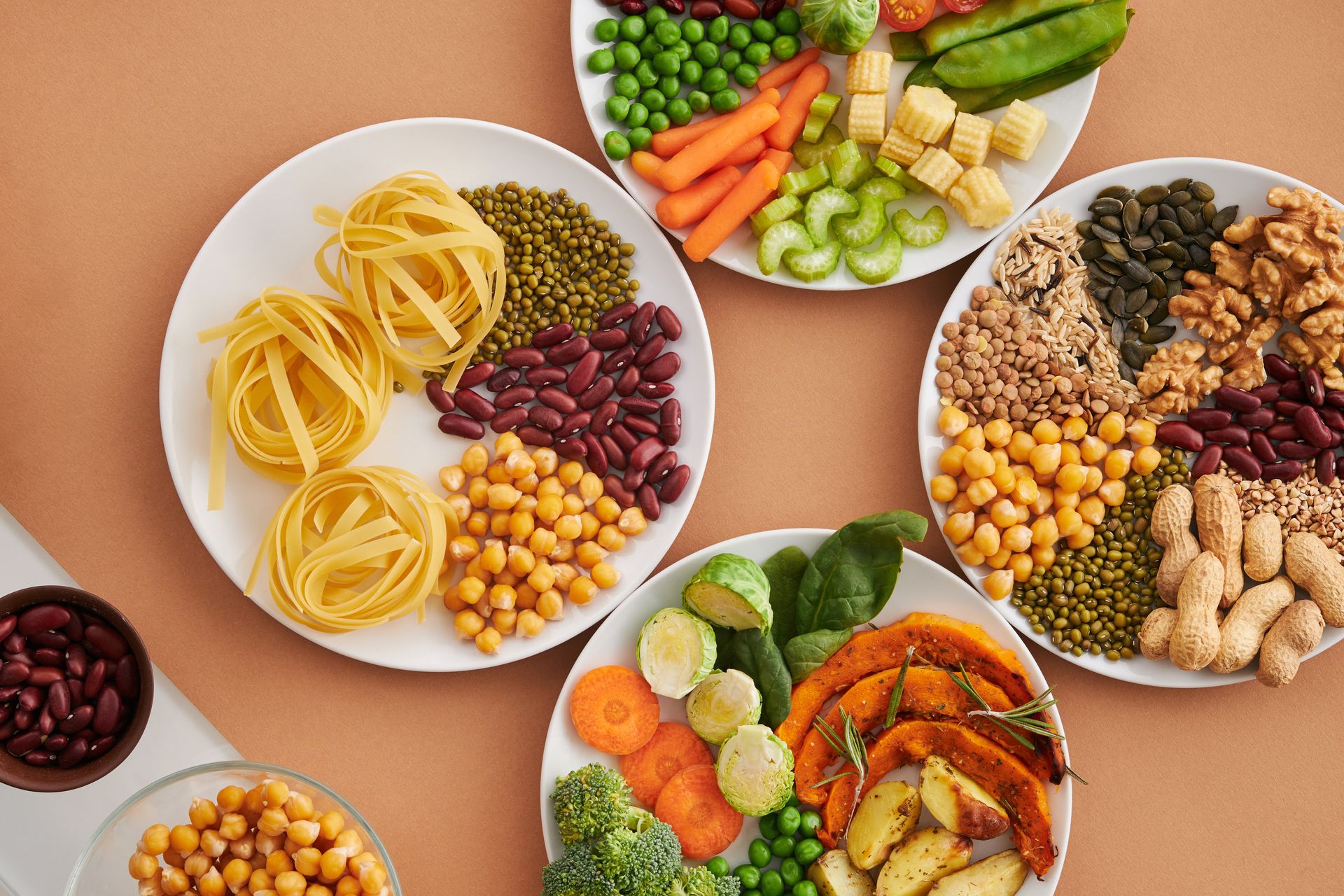
Photo by Vanessa Loring on Pexels.
Simple Ways to Get More Folate in Food
You don’t need a perfect meal plan or a full kitchen reset to make this work. Small changes add up.
Adding a handful of greens to a smoothie, tossing beans into soups or salads, or making avocado a regular part of meals you already enjoy can help boost folate in food naturally. If you want a starting point, our guide to balanced meals for women shows how to build a plate that covers these basics.
Signs You May Not Be Getting Enough Folate
Many grain products in the United States are fortified with folic acid, which has made outright folate deficiency uncommon. Some women are still more likely to run low, and it helps to know what to watch for.
Signs of low folate can include
- Fatigue and weakness that does not improve with rest
- Trouble concentrating or brain fog
- Irritability or a short fuse
- Headaches
You are more likely to run low if you
- Could become pregnant, or already are, since your needs go up
- Drink alcohol heavily on a regular basis
- Have a condition that affects absorption, such as celiac disease or inflammatory bowel disease
- Take certain medications, such as methotrexate
These signs overlap with low iron, low vitamin B12, thyroid problems, and many other things, so please do not guess with supplements. If you have them for more than two weeks, ask your doctor for blood work that checks your red blood cells, folate, and B12. I want you to get the right answer instead of a bigger bottle.
Why Folate Deserves a Place in Your Daily Health Routine
Life is demanding. Stress, busy schedules, hormonal changes, and not always eating perfectly all add up. Folate helps your body keep up with those demands.
It supports your energy, mood, and long-term health in quiet ways you may not notice until they’re missing. Instead of thinking about folate as something you only need during certain seasons, it’s more helpful to see it as part of everyday self-care. If you are also looking at other nutrients, our overview of dietary vitamins and supplements is a good next read, and if you are pregnant or planning to be, see our guide to healthy pregnancy and prenatal care.
Prioritizing folate high foods and paying attention to folate in food is a simple, realistic way to care for your energy, mood, and overall well-being.
Your body doesn’t need extremes or perfection. Sometimes, it just needs the right nutrients, consistently, to feel its best.
Frequently Asked Questions
Can you take too much folic acid?
Yes, it is possible. The upper limit for adults is 1,000 mcg a day of folic acid from supplements and fortified foods, according to the NIH Office of Dietary Supplements. Taking far more than you need can hide a vitamin B12 deficiency, which can lead to nerve damage if it goes untreated. Folate from food does not carry an upper limit. If your doctor prescribed a higher dose for a specific reason, follow that advice.
Should I take methylfolate instead of folic acid?
For most women, folic acid works well and has the strongest research behind it. MedlinePlus notes that common MTHFR gene variations do not necessarily raise your risk for any health condition, and the CDC still recommends folic acid for anyone who could become pregnant. If you have a known MTHFR variation, your doctor may suggest methylfolate (5-MTHF) instead. I would not switch on your own, especially if you could become pregnant.
Do I need a prenatal vitamin if I am not pregnant?
Not necessarily. What matters most is getting 400 mcg of folic acid a day if you could become pregnant. A plain folic acid supplement, or a multivitamin that lists 400 mcg of folic acid on the label, can do that. Prenatal vitamins usually add extra iron and other nutrients, so ask your OB/GYN which option fits you, especially if you are planning a pregnancy soon.
Can folic acid help with hot flashes?
Not clearly. In a randomized trial of postmenopausal women, folic acid did not reduce hot flashes more than a placebo over 12 weeks. If hot flashes are disrupting your sleep or your days, there are treatments with stronger evidence. Our guide to natural remedies for hot flashes is a good place to start, and your doctor can walk you through the rest.
Does alcohol affect folate levels?
Yes. Regular heavy drinking is a well-known cause of low folate, because alcohol interferes with how your body absorbs and uses it. If you drink regularly and feel unusually tired or foggy, mention it to your doctor so they can check your levels.
Take the Free Lifestyle Assessment
Answer a few quick questions, then reserve your free consultation with Doctor P.
Explore My Programs
From quick resets to hands-on support, here's everything I offer to help you feel like yourself again.
Program
The Madame Estrogen Mastermind
Access a comprehensive solution to say goodbye to your hormonal imbalance!
The Hormone Wellness Network
Embody hormone harmony. Unleash your inner wonder woman — masterclasses, accountability, sisterhood, access to me, and more!