

WOMEN'S HEALTH
Sea Moss Benefits for Women: learn how this nutrient-rich superfood supports hormones, energy, immunity, and overall wellness.
Sea Moss Benefits for Women: How to Use It, When to Take It, and What to Know
March 24, 2026
Quick Answer
Sea moss benefits for women come mainly from its iodine, iron, magnesium, and zinc content, minerals linked to thyroid function, energy, and immune health. But iodine content varies unpredictably between products, and too much can disrupt thyroid function, especially during pregnancy, breastfeeding, or if you already have a thyroid condition. Talk to your OB/GYN before adding it, especially if you take thyroid medication.
Key Takeaways
- Sea moss provides iodine, iron, magnesium, and zinc, but no clinical studies have tested sea moss itself for hormone, energy, or gut benefits in women.
- The American Thyroid Association advises against exceeding 500 mcg of iodine daily from kelp or iodine supplements.
- Sea moss can carry heavy metal contamination (arsenic, lead, cadmium) since it absorbs whatever is in the water it grows in.
- Sea moss is not recommended during pregnancy or breastfeeding due to unpredictable iodine levels.
- Anyone with a thyroid condition or on thyroid medication should talk to their OB/GYN before starting sea moss.
Sea moss has become a popular wellness add-on for women looking for natural ways to support hormones, energy, digestion, and skin. It’s rich in minerals like iodine, iron, magnesium, and zinc, nutrients the female body relies on for hormone balance, thyroid support, and overall health.
While it’s not a cure-all, many women use sea moss as a simple way to give their body extra nutritional support, especially during times of stress, fatigue, or hormonal changes.
Hormone and Thyroid Support
Sea moss naturally contains iodine, which supports thyroid function. Because the thyroid helps regulate metabolism, energy, and reproductive hormones, supporting it can affect how you feel day-to-day.
Some women notice improvements in energy, mood stability, and cycle consistency when their thyroid is properly supported. However, balance matters, too much iodine can negatively affect the thyroid, so moderation is important.
Is Sea Moss Backed by Science?
The honest answer is: not fully. No clinical trials have tested sea moss itself for hormone balance, energy, or gut health in women. What we do know is that sea moss contains nutrients, iodine, iron, magnesium, and zinc, that are individually linked to these functions in general nutrition research.
Both Cleveland Clinic and Northwestern Medicine note that high-quality evidence for sea moss specifically is limited, and that its actual nutrient content depends heavily on where and how it was grown. That doesn’t mean sea moss can’t be a reasonable addition to a balanced routine. It means the claims are best understood as nutrient-based reasoning, not proven clinical outcomes.
Energy, Skin, and Immune Support
Sea moss contains iron and other essential minerals that support oxygen flow, which can improve energy levels. Many women also use it to support skin health, thanks to nutrients such as magnesium and zinc that support hydration and repair.
It’s also commonly used for a few other things.
- Support immune health
- Help the body respond to inflammation
- Promote overall wellness during hormonal shifts
Gut Health and Digestion
Gut health plays a major role in hormone balance. Sea moss contains natural compounds that support digestion and help maintain a healthy gut microbiome.
When digestion improves, women may notice less bloating, better nutrient absorption, and more stable energy levels. Supporting the gut often supports hormones at the same time.
When to Take Sea Moss
Many women prefer taking sea moss in the morning so the body can use its nutrients throughout the day. Adding it to a morning routine makes it easier to stay consistent and can help support energy and digestion early on.
How to Take Sea Moss
Sea moss is flexible and easy to incorporate into everyday habits.
Common ways to take it include the following.
- 1–2 teaspoons added to a smoothie
- Mixed into tea
- Stirred into warm lemon water
- Capsule form for convenience
If choosing capsules, look for clean, lab-tested options from trusted sources. Quality matters when it comes to supplements.
| Form | Example from the article |
|---|---|
| Gel | Add to a smoothie, tea, or warm lemon water |
| Capsule | Choose a lab-tested option with clear product information |
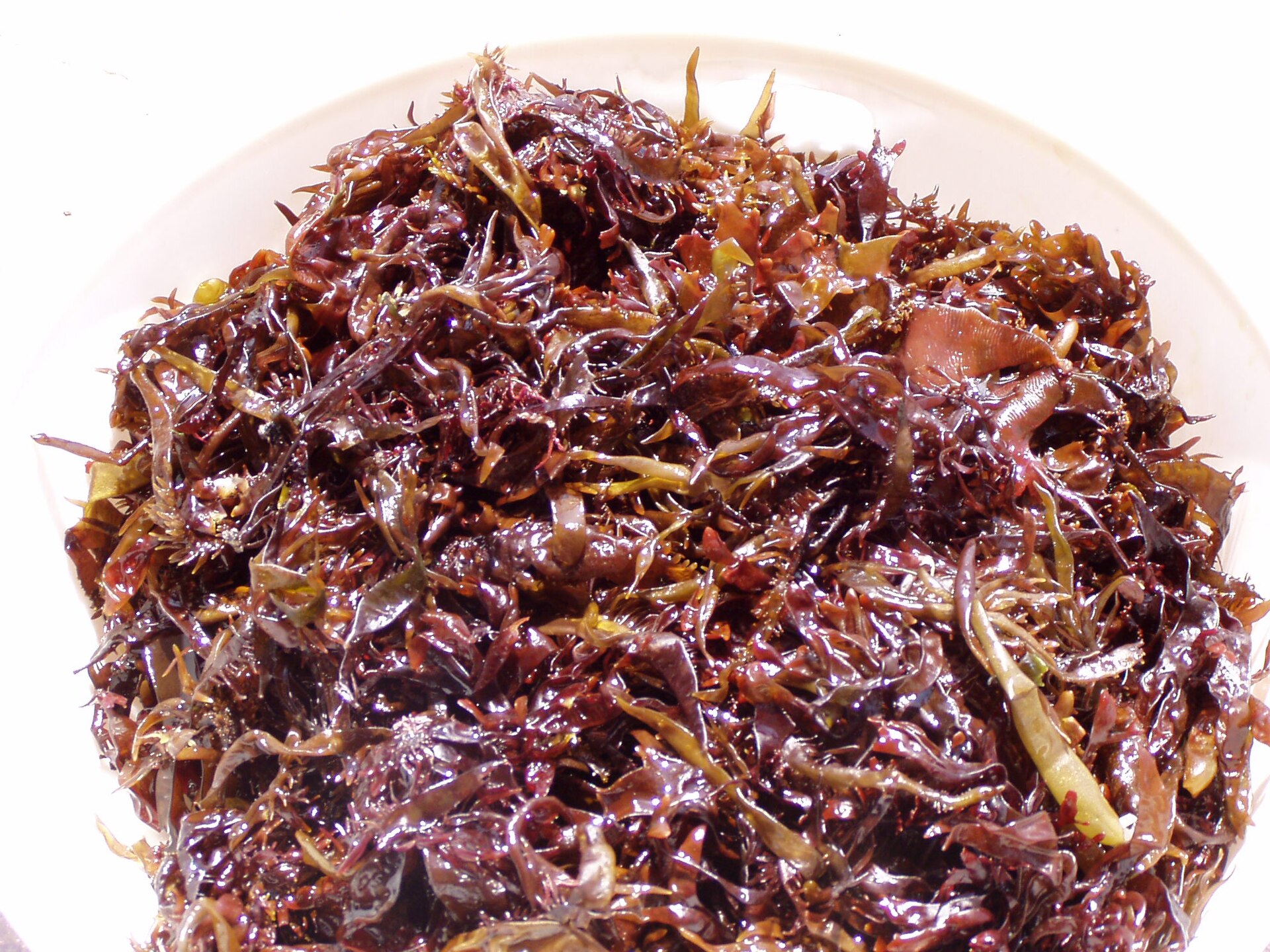
Photo by Giuseppe Sorbello via Wikimedia Commons (CC0 1.0).
Important Note About Iodine
Sea moss contains natural iodine, which is beneficial in the right amount but can be harmful in excess. The American Thyroid Association advises against exceeding 500 mcg of iodine daily from kelp or iodine supplements, and flags pregnant women, breastfeeding women, and anyone with a pre-existing thyroid condition as most vulnerable to iodine-related harm.
The tricky part is that commercial sea moss products don’t reliably disclose how much iodine they contain. Iodine content varies by species and growing conditions, and there’s often no real way to know exactly what’s in a given product without independent testing.
If you have a thyroid condition or take thyroid medication, Northwestern Medicine recommends a baseline thyroid panel before starting sea moss, with a follow-up panel 6 to 8 weeks later to confirm your levels are holding steady.
Consistency and moderation are key. More is not always better.
Heavy Metals, Pregnancy, and When to Talk to Your OB/GYN First
Sea moss isn’t just about iodine. Because it grows in ocean water, it can also absorb heavy metals like arsenic, lead, and cadmium from its environment. A risk assessment covering seaweed samples from 22 countries found measurable levels of both in red and brown algae, and the Department of Defense’s Operation Supplement Safety program recommends confirming the species on the label and looking for a batch-specific certificate of analysis (COA) showing heavy-metal test results before buying.
Talk to your OB/GYN before starting sea moss if any of the following apply to you.
- You have a thyroid condition, including hypothyroidism, hyperthyroidism, Hashimoto’s, or Graves’ disease
- You take thyroid medication such as levothyroxine
- You are pregnant or breastfeeding. NIH’s LactMed database advises against sea moss during breastfeeding unless iodine and heavy metal levels have been independently tested and confirmed low, since maternal iodine excess can suppress a breastfed infant’s thyroid function
- You aren’t sure whether your product has been third-party tested for heavy metals or iodine content
If you and your OB/GYN decide sea moss is a reasonable fit for you, a baseline thyroid panel before starting, with a follow-up panel 6 to 8 weeks later, is the simplest way to confirm your levels are holding steady, sis. That’s not overcaution. That’s exactly how you catch a problem before it becomes one.
Why Many Women Are Adding Sea Moss to Their Routine
Women often seek natural ways to support their hormones, energy, digestion, and skin without overcomplicating their routines. Sea moss is appealing because it provides a variety of minerals in one simple addition.
Many use it to support the following.
- Hormone balance
- Energy levels
- Thyroid health
- Skin health
- Digestion
- Immune function
Sea moss can be a supportive addition to a wellness routine, especially for women focused on hormone health, digestion, and energy. When used in moderation and paired with balanced nutrition, sleep, and stress management, it can help the body feel more supported overall.
Start simple, stay consistent, and pay attention to how your body responds. And if you’re not sure whether your hormones are actually behind the symptoms you’re hoping sea moss will fix, the Ultimate Hormone Assessment can help you find out.
Frequently Asked Questions
Is sea moss safe to take every day?
For most healthy adults without thyroid conditions, occasional or daily use in food-level amounts (1 to 2 teaspoons) is generally considered low risk. Sea moss’s iodine content is unpredictable between products, though, so if you plan to take it daily long term, talk to your OB/GYN first, especially if you have any thyroid history.
Can sea moss interfere with thyroid medication?
It can. Sea moss’s iodine content varies widely and isn’t always listed accurately on labels. Unpredictable iodine intake can make it harder to keep thyroid medication like levothyroxine dosed correctly, so anyone on thyroid medication should check with their OB/GYN before adding it.
Is sea moss safe during pregnancy or breastfeeding?
It’s generally not recommended. Excess iodine during pregnancy and breastfeeding can affect fetal or infant thyroid function, and NIH’s LactMed database specifically advises against sea moss while breastfeeding unless iodine and heavy metal levels have been independently confirmed safe.
Does sea moss actually help with hormone balance?
There’s no clinical research testing sea moss itself for hormone balance in women. It contains nutrients like iodine, iron, and magnesium that are individually linked to thyroid and energy function, but that’s a nutrient-based rationale, not a proven effect of sea moss specifically.
How much sea moss should I take?
There’s no official standard dose. Most people who use it take 1 to 2 teaspoons of gel, or the equivalent in capsule form, daily. Because iodine content varies by product, more isn’t automatically better. Choosing a brand with third-party heavy-metal and iodine testing matters more than the exact amount.
Take the Free Lifestyle Assessment
Answer a few quick questions, then reserve your free consultation with Doctor P.
Explore My Programs
From quick resets to hands-on support, here's everything I offer to help you feel like yourself again.
Program
The Madame Estrogen Mastermind
Access a comprehensive solution to say goodbye to your hormonal imbalance!
The Hormone Wellness Network
Embody hormone harmony. Unleash your inner wonder woman — masterclasses, accountability, sisterhood, access to me, and more!