

WOMEN'S HEALTH
Balance your hormones naturally with a period diet plan that supports cycle health, eases PMS symptoms, and boosts energy in just 7 days.
How to Build a Period Diet Plan You Can Stick With
October 9, 2025
Quick Answer
A period diet plan means gently adjusting what you eat across your cycle: more iron and hydration during your period, steady energy foods afterward, and magnesium-rich, blood-sugar-friendly foods before your period to ease PMS. This idea, often called “cycle syncing,” is a popular framework, but it isn’t a clinically proven protocol. It works best as a flexible guide, not a rigid set of daily rules, and it doesn’t apply the same way if you have PCOS (recently renamed polyendocrine metabolic ovarian syndrome, or PMOS), are on hormonal birth control, or are in perimenopause.
Key Takeaways
- “Cycle syncing” is a popular framework, but research hasn’t clinically validated that eating specific foods on specific days changes outcomes.
- A normal menstrual cycle ranges from 21 to 35 days, not a fixed 28, so the day ranges below are illustrative, not an exact calendar for everyone.
- Pairing iron-rich foods with vitamin C is real nutrition science, though the effect is more modest across a full day’s diet than single-meal studies suggest.
- If you have a history of disordered eating, rigid day-by-day food rules can be a real risk, not just an inconvenience. Talk to your doctor or a dietitian about an individualized approach instead.
- This framework doesn’t map cleanly onto PCOS, hormonal birth control, or perimenopause, since all three change or suppress the natural hormone pattern it assumes.
As an OB-GYN (and a woman who has been through plenty of moody, crampy, chocolate-craving cycles myself), I know how much your period can run the show if you let it. But here’s the good news: what you eat can make a real difference in how you feel throughout your menstrual cycle. That’s right, a thoughtful period diet plan isn’t just about surviving PMS with a stash of snacks. It’s about supporting your body through the natural hormone shifts that happen every month.
A quick honesty note before we dive in: this approach, often called “cycle syncing,” is a popular wellness framework, not a clinically proven protocol. Cleveland Clinic notes it hasn’t been researched in a clinical setting, even though real research does show your energy, mood, and appetite can shift across your cycle. Think of what follows as general, phase-informed nutrition ideas grounded in normal nutrition science, a flexible guide, not a rigid rulebook.
The truth is, your body doesn’t need the exact same things every single day. Estrogen rises and falls, progesterone takes its turn, and your energy and cravings often follow suit. By loosely matching your diet to the different phases of a typical cycle, you can give your body the fuel it needs to feel more stable, day to day.
Menstrual Phase (Days 1–5): Nourish and Replenish
These phase ranges assume a typical 28-day cycle, but a normal cycle can run anywhere from 21 to 35 days, and the follicular phase in particular varies most between people. If your cycle doesn’t match these exact numbers, that doesn’t mean anything is wrong.
This is when your period starts, the time when your body is shedding the uterine lining, and your energy may feel like it’s at rock bottom. Blood loss means you’re also losing iron, so focusing on replenishment is key.
What to eat:
- Iron-rich foods: spinach, kale, lentils, beef, and pumpkin seeds. Pairing these with vitamin C foods (like oranges, strawberries, or bell peppers) may modestly help your body absorb iron, though the effect is smaller across a full day’s meals than single-food studies suggest.
- Hydrating foods: watermelon, cucumber, and soups to combat bloating.
- Comforting warm foods: stews, herbal teas, and roasted vegetables can help ease cramps and feel soothing.
Follicular Phase (Days 6–11): Energy and Growth
As your period ends, estrogen starts to rise, and you’ll likely feel more energetic, upbeat, and creative. This is a great time to load up on foods that support brain function and energy, since your body is essentially “resetting” after menstruation.
What to eat:
- Lean protein: chicken, fish, eggs, and tofu to help repair and strengthen tissues.
- Complex carbs: quinoa, oats, and sweet potatoes to keep energy levels steady.
- Fresh fruits and veggies: berries, leafy greens, and colorful produce for antioxidants and vitamins.
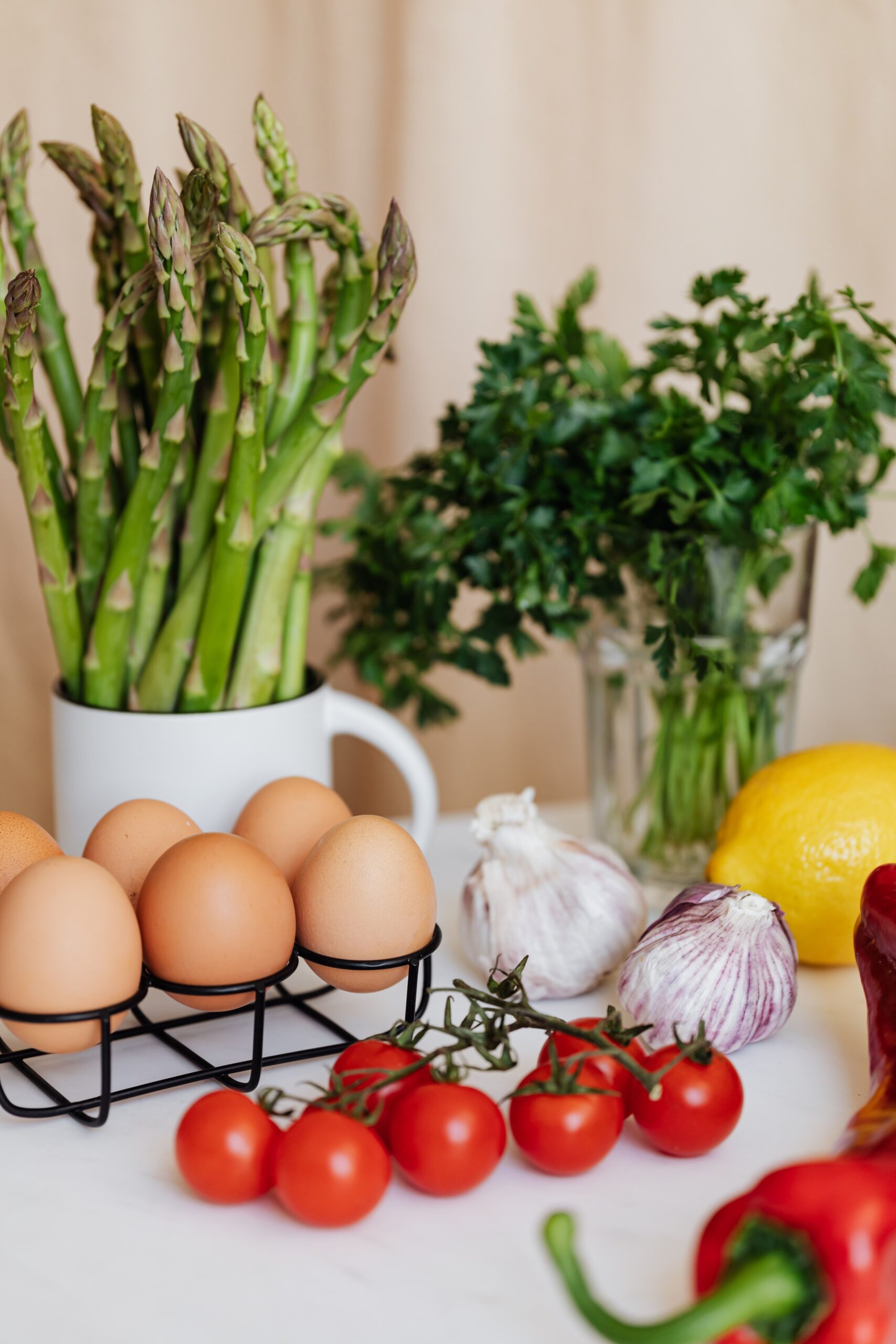
Photo by Kaboompics.com on Pexels.
Ovulatory Phase (Days 12–14): Support Fertility
Ovulation is when estrogen peaks, and your body is at its most fertile. You might notice a natural boost in confidence and energy. Fiber-rich foods support your gut microbiome’s normal role in processing and eliminating estrogen, a genuinely useful habit throughout the month, not just this week.
What to eat:
- Fiber-rich foods: broccoli, brussels sprouts, apples, and beans support your gut’s normal estrogen-processing role.
- Zinc-rich foods: pumpkin seeds, chickpeas, and nuts for reproductive health.
- Hydration heroes: drink lots of water and add in infused water to keep things moving.
Luteal Phase (Days 15–28): Calm PMS and Cravings
The phase we often dread, bloating, cravings, and mood swings. Progesterone rises, then falls, and your body is preparing for either pregnancy or your next period. This is when a period diet plan is truly your best friend.
What to eat:
- Magnesium-rich foods: dark chocolate (yes, really!), almonds, and spinach to reduce cramps and irritability.
- Complex carbs: brown rice, whole grains, and root veggies to balance blood sugar and fight cravings.
- Anti-inflammatory foods: salmon, walnuts, chia seeds, and turmeric to help with bloating and mood.
A period diet plan isn’t about restriction or being perfect; it’s about understanding your body and giving it what it needs throughout each stage of the cycle. When you focus on the right nutrients at the right time, you’ll not only support hormone balance but also feel more in tune with your own rhythms.
And honestly, that’s what I want for every woman I work with: to feel less at war with her cycle and more like she’s working with her body.
This Isn't for Everyone
If you have a history of disordered eating, day-by-day food rules can be a real risk, not just an inconvenience. Research consistently links rigid dietary restriction to a meaningfully higher risk of developing an eating disorder. Skip the phase-based framework entirely and talk to your doctor or a registered dietitian about an individualized approach instead.
This framework also assumes a natural, ovulating cycle, which doesn’t describe everyone.
- PCOS often involves irregular or absent ovulation, so the “ovulatory phase” this plan assumes may not happen on any predictable schedule.
- Hormonal birth control suppresses the natural hormone swings this whole framework is built around, so the phases described here don’t reflect what’s actually happening in your body.
- Perimenopause brings increasingly irregular, often anovulatory cycles, so day-numbering against a 28-day model doesn’t have a reliable anchor point.
If any of this describes you, sis, that doesn’t mean healthy eating stops mattering. It means a generic phase-by-phase plan isn’t built for your body. Talk to your OB/GYN about what actually fits your situation.
Frequently Asked Questions
Do I have to follow this diet plan exactly, day by day?
No. Real cycles range from 21 to 35 days, and the follicular phase especially varies between people. Use the phase descriptions as a loose guide to what your body might need, not a rigid calendar.
Is "cycle syncing" backed by real science?
Not really, not yet. Research does show energy, mood, and appetite can shift across your cycle, but there isn’t strong clinical evidence that eating specific foods on specific days changes outcomes. Treat this as general, phase-informed nutrition, not a proven protocol.
Does this diet plan still apply if I have PCOS or take hormonal birth control?
Not in the way it’s written here. PCOS often involves irregular or absent ovulation, and hormonal birth control suppresses the natural cycle this framework assumes, so the day-by-day structure doesn’t have a reliable anchor point for either group. Talk to your OB/GYN about an approach suited to your actual hormone pattern.
Is a period diet plan safe if I have a history of disordered eating?
Approach it carefully. Rigid day-by-day food rules are linked to a meaningfully higher risk of developing an eating disorder. If you have any history of disordered eating, skip the phase-based structure and talk to your doctor or a registered dietitian instead.
Can changing my diet actually reduce period cramps and PMS?
Some of it, yes, though not through magic ingredients. Iron-rich foods can help replace what you lose during your period, and magnesium-rich foods are linked to less cramping and irritability. The bigger, better-supported factor is overall balanced eating and hydration, not any single “hormone-balancing” food.
What’s Next?
Ready to reset your cycle and reclaim your health? Join our 7-Day Challenge today and get started with a period diet plan designed to ease symptoms, balance hormones, and improve your overall wellbeing. Sign up now and let this week be the turning point toward stronger, more vibrant health.
Take the Free Lifestyle Assessment
Answer a few quick questions, then reserve your free consultation with Doctor P.
Explore My Programs
From quick resets to hands-on support, here's everything I offer to help you feel like yourself again.
Program
The Madame Estrogen Mastermind
Access a comprehensive solution to say goodbye to your hormonal imbalance!
The Hormone Wellness Network
Embody hormone harmony. Unleash your inner wonder woman — masterclasses, accountability, sisterhood, access to me, and more!