

HORMONES
Discover how too much screen time can mess with your hormones, affect sleep, and throw your mood and metabolism off balance.
Understanding the Hormonal Impact of Screen Time on Women
November 10, 2025
Quick Answer
Screen time affects your hormones mainly through two connected pathways. Blue light in the evening suppresses melatonin, the hormone that helps you fall and stay asleep. That lost sleep then raises cortisol, your stress hormone, which can throw off insulin, thyroid, and reproductive hormones over time. A few intentional screen habits before bed can protect all three.
Key Takeaways
- Evening screen light suppresses melatonin by signaling your brain that it is still daytime
- Lost sleep raises evening cortisol, which can stay elevated when it should be dropping
- Over time this can affect reproductive hormones, insulin, and thyroid function
- Daily bedtime screen use is linked to a 33 percent higher rate of poor sleep quality
- A consistent screen curfew and morning light exposure are the two highest impact habits
- If poor sleep happens 3 or more nights a week for 3 months or longer, it is time to talk to your OB/GYN
We live in a world where our phones, tablets, and laptops are practically glued to us. Whether it’s scrolling late at night, answering emails on the go, or relaxing with a favorite show, screen time is simply part of daily life. But here’s the piece that often gets overlooked. Too much screen time can affect your hormones, and for women, those shifts can make a real difference in sleep, mood, and overall well-being.
I’ve had countless conversations with women who struggle with fatigue, poor sleep, or feeling “wired but tired.” And while stress, nutrition, and life demands play a role, the screens we rely on also sneak into this equation. Let’s break it down.
Blue Light and Sleep Disruption
Your body has a natural rhythm, known as the circadian rhythm, which signals when you should feel awake and when you should feel sleepy. Specialized cells in your retina sense blue light specifically and send that signal straight to your brain’s master clock, a small cluster of cells called the suprachiasmatic nucleus.
Here is the part most screen time advice leaves out. Once your master clock registers blue light as daytime, it tells your pineal gland to slow production of melatonin, the hormone that helps you wind down and sleep. Research measuring specific wavelengths of light found that blue light is the most disruptive part of the spectrum to melatonin production, and a single evening of concentrated exposure can suppress it by more than half. Without enough melatonin, you might fall asleep later, wake up during the night, or not reach the deep, restorative sleep stages your body needs to repair itself.
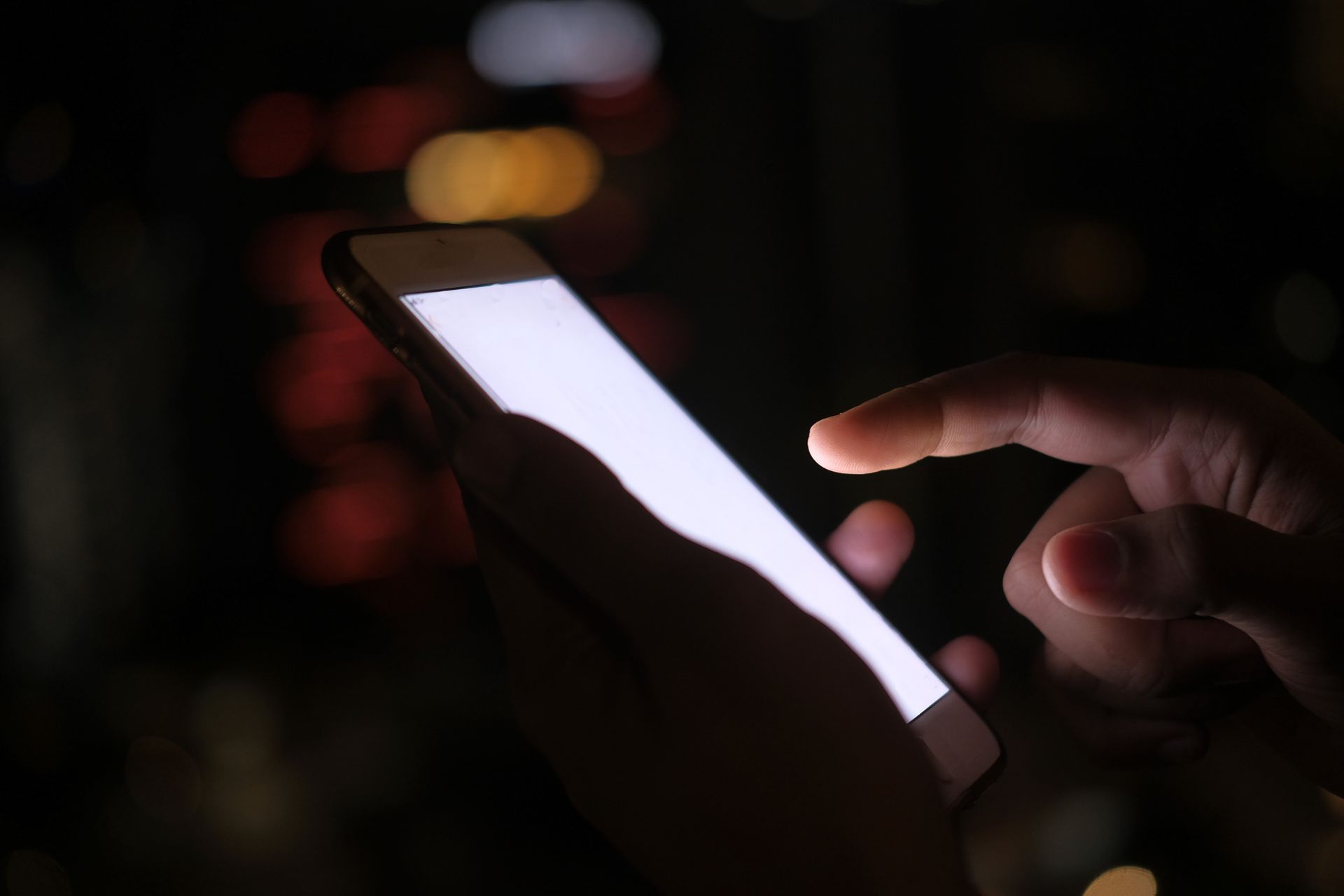
Photo by Towfiqu barbhuiya on Pexels.
How Much Screen Time Actually Matters
You do not have to hit a specific number of hours before your hormones notice. What matters more is timing and consistency. A 2025 study of more than 122,000 adults found that daily screen use at bedtime was linked to a 33 percent higher rate of poor sleep quality and about 50 fewer minutes of sleep a week compared with people who kept screens out of bed.
The dose matters too. Melatonin suppression from blue light is dose dependent, meaning brighter screens, longer exposure, and later timing all add up to a bigger hormonal effect. This is why a quick text at 9pm affects you differently than an hour of scrolling at midnight.
Cortisol and Stress Patterns
When your sleep gets disrupted, your cortisol patterns often follow. Cortisol is your stress hormone, and it normally rises in the morning to wake you up, then gradually falls throughout the day. Deep sleep helps keep this rhythm in check. When sleep is cut short or interrupted, that natural brake comes off.
Sleep research shows that after even one night of restricted sleep, evening cortisol can run more than a third higher than it should be. Late-night screen scrolling contributes to exactly this kind of restriction, keeping cortisol elevated when your body is supposed to be winding down. If cortisol dysregulation sounds familiar, here is a closer look at how stress hormones shape your body.
This leaves you feeling:
- Restless at night
- Wired when you should be winding down
- Sluggish in the morning
Hormone Balance and Women’s Health
Sleep and stress hormones do not work in isolation. They ripple through your entire hormonal system. Poor sleep and high cortisol can throw off:
- Reproductive hormones (estrogen, progesterone, LH, FSH), leading to irregular cycles or worsening PMS symptoms. If you want a deeper look at what irregular cycles can signal, these are 12 warning signs of a hormonal imbalance worth knowing.
- Insulin, making it harder to manage weight, cravings, or blood sugar. This is one of several ways your hormones affect your weight.
- Thyroid hormones, contributing to fatigue, brain fog, and sluggish metabolism.
If you are living with PCOS (recently renamed polyendocrine metabolic ovarian syndrome, or PMOS), this cycle can hit differently. Research comparing women with and without PCOS has found higher evening cortisol and altered melatonin patterns in the PCOS group. This does not mean screen time causes PCOS. It means PCOS and disrupted sleep hormones tend to show up together, so protecting your sleep is one more tool in managing it.
The same goes for perimenopause. Your hormones are already shifting on their own during this stage, and added sleep disruption can make those swings feel bigger than they need to be.
Over time, chronic disruption from excessive screen time can leave you feeling out of sync with your body. Learn more about the most common hormone imbalances and how they show up.
Practical Tips to Protect Your Hormones
You don’t have to throw away your phone or stop watching your favorite Netflix show. Small, intentional shifts can go a long way:
- Set a screen curfew – Aim to unplug at least 1 hour before bed.
- Use blue light filters – Many devices have “night mode” to reduce blue light exposure.
- Prioritize morning light – Get natural sunlight exposure early in the day to help reset your circadian rhythm.
- Create a bedtime routine – Swap screens for relaxing rituals like reading, stretching, or journaling.
- Limit “doom scrolling” – Notice how stress from social media adds to cortisol spikes. Try mindful breaks instead.
Technology is here to stay, and screens are not the enemy. Being mindful of their impact is what matters. By understanding how screen time affects your hormones, you can take small steps that protect your sleep, reduce stress, and support better balance in your body.
Your health is not about perfection. It is about awareness and consistency. And sometimes that starts with something as simple as putting your phone down a little earlier tonight.
If you want a fuller picture of what your hormones are doing and where to start, Dr. P created the Ultimate Hormone Assessment to help you find the root of your symptoms in about ten minutes.
When to Talk to Your OB/GYN About Sleep and Hormone Changes
Occasional restless nights after a late scroll session are normal and not something to worry about. A clinical pattern worth addressing looks different. If sleep trouble happens 3 or more nights a week for 3 months or longer, that crosses from an occasional bad night into a pattern I want to know about.
I also want to hear from you sooner if you notice:
- Periods becoming irregular or unusually heavy alongside ongoing poor sleep
- Weight change, new or worsening acne, or hair thinning that showed up around the same time your sleep got worse
- Fatigue or brain fog severe enough to affect your work or daily life
- Mood changes that feel bigger than what stress alone explains
None of this means something is seriously wrong, sis. It means your body is telling you it needs support, and that is worth a conversation.
Frequently Asked Questions
How much screen time before bed is too much for my hormones?
There is no universal cutoff, but timing and consistency matter more than a hard number. Daily screen use right at bedtime is linked to a 33 percent higher rate of poor sleep quality. A reasonable starting point is a 1 hour screen curfew before bed, then adjust based on how you feel.
Does night mode or a blue light filter actually protect my hormones?
Night mode helps by reducing the blue wavelengths your eyes send to your brain’s master clock, but it does not eliminate the signal completely. It is a useful tool, not a replacement for actually powering down before bed.
Can screen time really affect my period or menstrual cycle?
Indirectly, yes. Screen time itself does not directly change your cycle, but the sleep loss and cortisol shifts it causes can throw off the reproductive hormones that regulate your cycle. This is one more reason consistent sleep matters for hormone health, not just energy.
Does screen time affect women with PCOS or in perimenopause differently?
Both groups tend to be more sensitive to sleep disruption. Research has found women with PCOS (PMOS) often show different evening cortisol and melatonin patterns than women without it, and perimenopause already brings its own hormone swings. Protecting your sleep is a meaningful, low effort tool in both cases.
When should I see my OB/GYN about screen time and sleep-related symptoms?
If poor sleep is happening 3 or more nights a week for 3 months or longer, or if it comes with cycle changes, mood changes, or fatigue that is affecting your daily life, that is worth a conversation with your OB/GYN.
Take the Free Lifestyle Assessment
Answer a few quick questions, then reserve your free consultation with Doctor P.
Explore My Programs
From quick resets to hands-on support, here's everything I offer to help you feel like yourself again.
Program
The Madame Estrogen Mastermind
Access a comprehensive solution to say goodbye to your hormonal imbalance!
The Hormone Wellness Network
Embody hormone harmony. Unleash your inner wonder woman — masterclasses, accountability, sisterhood, access to me, and more!